



Best Ayurvedic Hair Care Products for Reducing Hair Fall and Dandruff
Best Ayurvedic Hair Care Products for Reducing Hair Fall and Dandruff
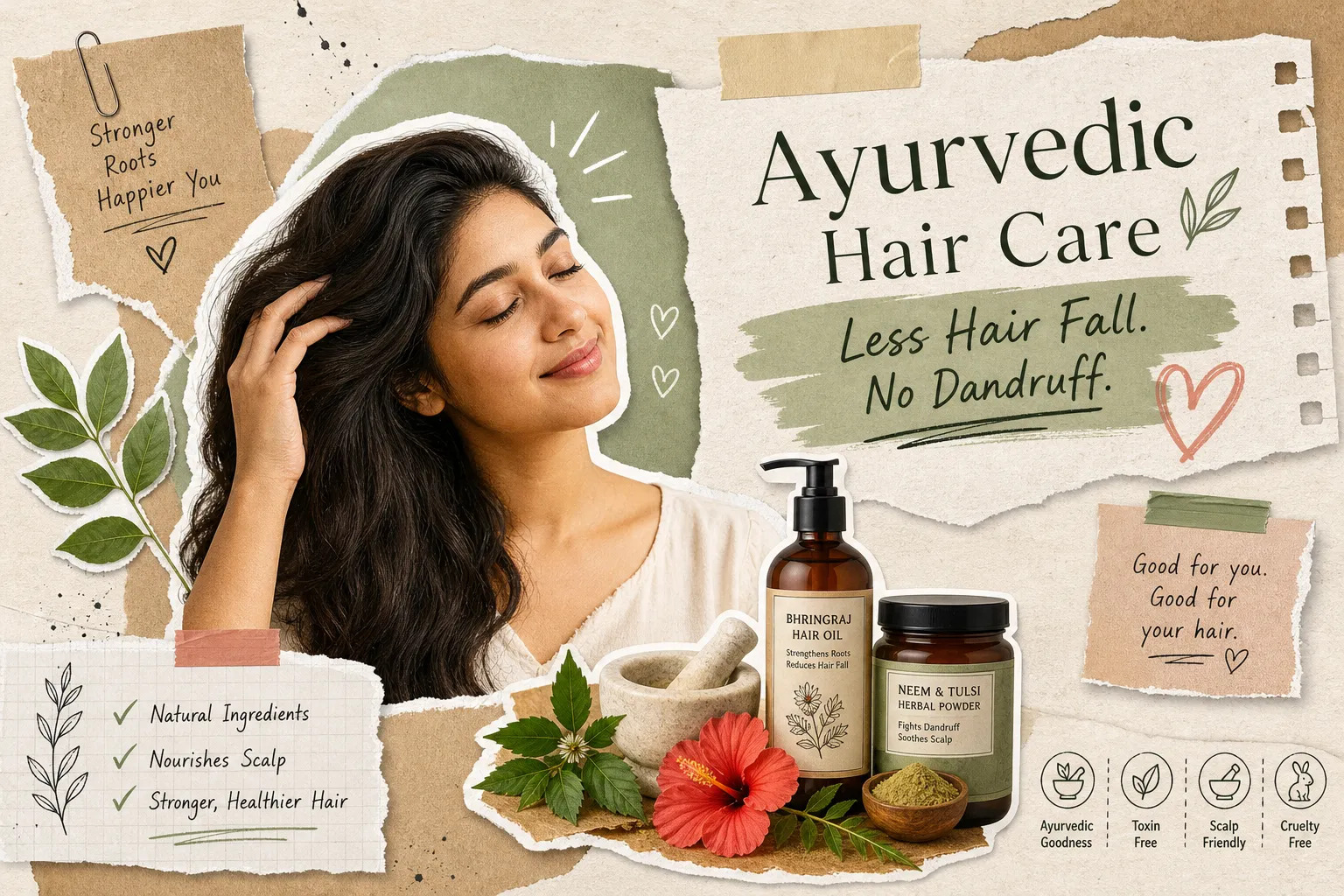
You notice it in the shower drain first. Then on the pillow. Then, unmistakably, in the brush. You walk to the nearest pharmacy and find a shelf crowded with shampoos making bold promises, with ingredient lists that read like a chemistry textbook. It is a frustration that many people in India face every season, and it rarely ends with a satisfying solution. If you are looking for ayurvedic hair care products to reduce hair fall and dandruff, this guide covers the best ingredients, formats, and buying tips suited to Indian hair.
Ayurvedic herbal hair care takes a different approach. Rather than layering synthetic actives on a struggling scalp, it works with a set of botanical ingredients that have been in continuous use on the subcontinent for centuries. The evidence for some of these herbs is stronger than for others, and we will be honest about that distinction. At Hair Fall Oil, we formulate these classical Ayurvedic herbs into 100% organic, cruelty-free products built specifically for Indian hair concerns.
By the end of this article, you will know which ingredients target which concerns, which ayurvedic hair care products suit your hair type, how to apply each product correctly, and what certifications to look for when buying in India.
What the key Ayurvedic ingredients actually do for your hair
Not all herbal hair ingredients work the same way. Some target the scalp environment; others strengthen the hair shaft. Knowing the difference helps you pick the right ayurvedic hair care product for your specific concern rather than guessing at the shelf.
Bhringraj and amla: the most studied herbs for hair fall
Bhringraj (Eclipta alba) has the strongest preclinical evidence among the commonly used Ayurvedic hair herbs. Animal studies have found faster follicle entry into the anagen (growth) phase and improved hair density. Robust human clinical trials are still limited, so we will not overstate the case, but bhringraj has an uninterrupted tradition of scalp use in India that spans centuries alongside a growing body of experimental support.
Amla (Phyllanthus emblica) works differently. Its primary contribution is antioxidant and anti-inflammatory activity, which supports a healthier scalp environment. Amla will not reverse pattern hair loss on its own, but as part of a regular oil routine it conditions both the scalp and the hair shaft, reducing the oxidative stress that contributes to dullness and breakage.
Hibiscus, neem and fenugreek for dandruff and scalp comfort
Fenugreek has the strongest traditional support for reduced shedding in this group, backed by small-scale studies and extensive historical use. Hibiscus is traditionally used as a conditioning herb: it softens the hair shaft and soothes scalp irritation, making it particularly useful for coarse or breakage-prone hair. Neem’s antifungal properties make it the practical choice for dandruff-prone scalps.
These three herbs address scalp comfort and hair-shaft health more reliably than they drive follicle-level regrowth. That is a clarification, not a limitation. A calm, well-conditioned scalp is the foundation for any meaningful improvement in hair fall.
Which ayurvedic hair care products suit your hair type
The right ingredient matters far less if you are using the wrong format. Oils, shampoos, and masks each reach the scalp differently, and matching the format to your hair type is the first practical step before you look at any specific brand.
Oils: best for dry, coarse and breakage-prone hair
If your hair is dry, coarse, curly, or snapping at the ends, a bhringraj- or amla-based oil applied two to three times weekly suits your hair best. Used with the warm-oil, section-by-section method described below, it penetrates the scalp and lubricates the hair shaft before moisture is lost to the environment. Oily or fine hair types should use oil sparingly, once a week or less, focusing application on the scalp rather than the lengths.
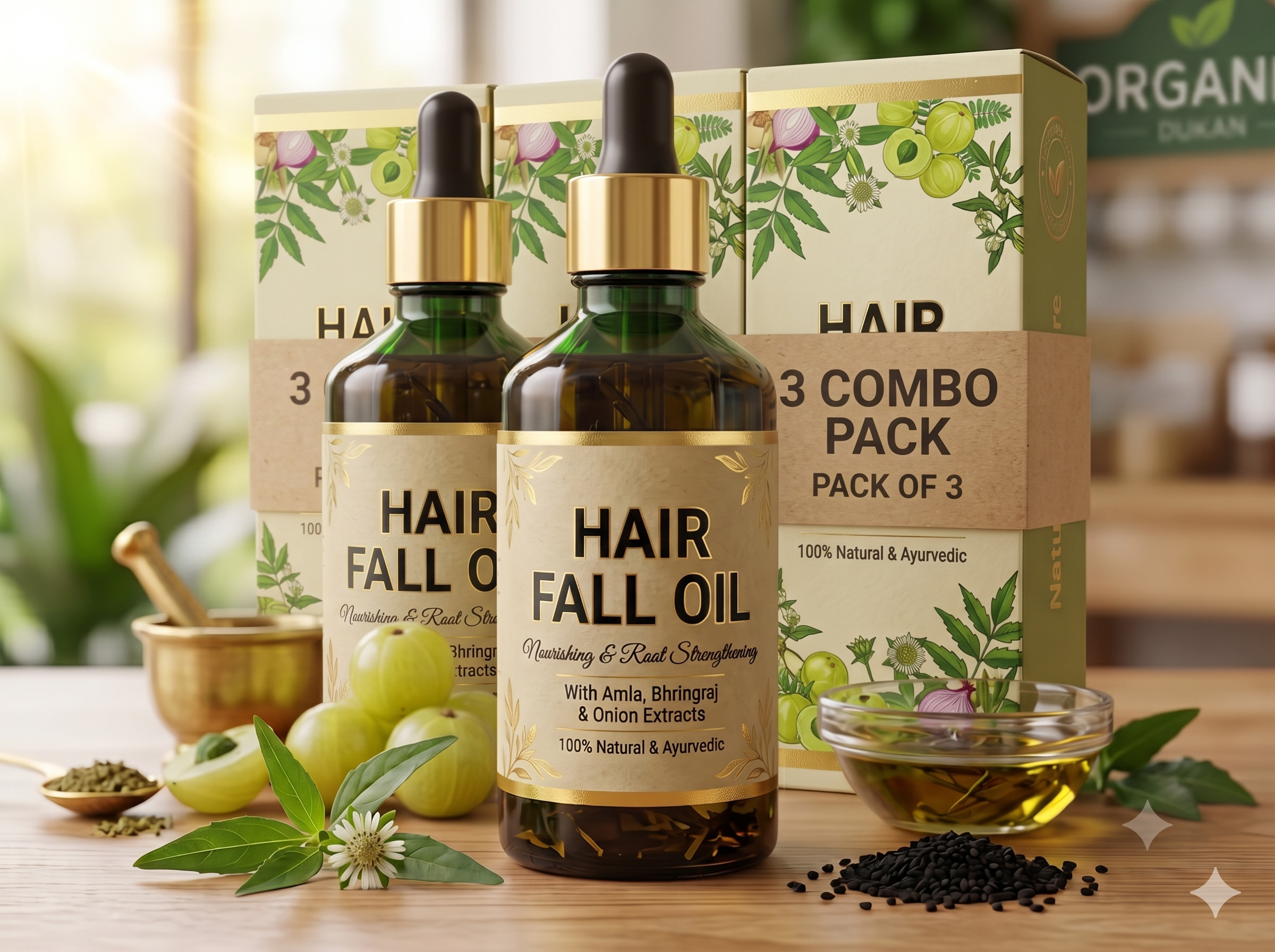
Hair Fall Oil offers an Ayurvedic anti-hair fall oil.
Shampoos and masks: when cleansing and conditioning come first
For oily or dandruff-prone scalps, a herbal shampoo used two to four times weekly is the better starting point. Frequent cleansing with a neem- or shikakai-based formula keeps the scalp balanced without the stripping effect of sulphate-heavy shampoos. Hair masks suit any hair type, but the formula matters: choose a lightweight amla or fenugreek-based pack for oily hair and a richer coconut-oil-based mask for dry or damaged hair. Leave any mask on for 20 to 45 minutes and rinse before it dries completely.
How to apply ayurvedic hair care products for real results
The right way to massage oil into your scalp
Warm the oil indirectly by placing the bottle in a bowl of hot water for three to five minutes until it feels comfortably warm on your inner wrist. Never heat it directly or in a microwave.
Part the hair in sections and apply the oil to the scalp using your fingertip pads, not your nails, working in slow circular movements from the crown outward to the temples, hairline, and base of the skull. Spend five to ten minutes on this step: the massage itself improves scalp circulation, and that matters as much as the oil you choose. Leave the oil on for at least 30 minutes; overnight application works well for dry or damaged hair. Wash out gently with lukewarm water and a mild shampoo.
Applying herbal shampoos and packs without the mess
For powdered herbal shampoos, mix into a thin, fresh paste with water and apply mainly at the roots of wet hair. Work gently through the scalp, rinse thoroughly, and condition the lengths if they feel rough after rinsing. For hair packs, apply to damp hair, cover loosely with a shower cap, and rinse before the pack dries hard. Start with the lowest recommended frequency for each product and adjust over two to four weeks based on how your scalp responds.
The best ayurvedic hair care products for hair fall in 2026
Hair Fall Oil: an Ayurvedic option worth starting with
Every product we make is cruelty-free, not tested on animals, and comes in recycled packaging, distinctions that matter in a market where these claims are frequently made without any verification behind them. If you are new to Ayurvedic hair care, our starter kits and gift sets offer a straightforward way to try the full routine without committing to individual products one at a time.
Our gift sets are also a practical choice for someone in your household dealing with hair fall or scalp concerns. The complete range covers hair, face, body, and children’s care, all formulated to the same organic standard.
Other options worth knowing by budget and concern
The wider market covers a broad price range. At the premium end, Amazon India lists the Forest Essentials Bhringraj and Shikakai Hair Cleanser at ₹1,595. These are useful reference points, but certified organic credentials and ingredient transparency vary significantly across the category, so always read the full ingredient list before purchasing.
Safety, children and what to check before you buy
Is it safe for children and sensitive users?
Topical Ayurvedic products carry a lower risk profile than oral supplements, but patch-testing is essential before full use, particularly for children. Apply a small amount to the forearm and monitor for 24 to 48 hours before using the product on the scalp. Our kids’ care line at Hair Fall Oil is formulated specifically for sensitive skin, with gentle ingredients chosen for children’s needs.
Neem oil must never be ingested, and should only be used on children in diluted, ready-to-use formulations. Pregnant or breastfeeding women should avoid oral Ayurvedic preparations without medical advice; mild, clearly labelled topical products are generally lower risk but must carry a full, transparent ingredient list with no undisclosed additives.
Drug interactions and ingredients to watch
The key safety concerns apply mainly to oral or high-concentration preparations rather than topical hair oils. Fenugreek may lower blood glucose and increase bleeding tendency, particularly for those on diabetes medicines or anticoagulants. Concentrated oral amla and turmeric preparations may interact with blood-thinning medications. Brahmi may cause drowsiness and could interact with sedatives or antiseizure medicines.
For topical hair oils used at normal frequency and dilution, these risks are significantly lower. Stop use immediately if burning, swelling, or persistent itching occurs after application, and seek medical advice. Do not assume that “natural” means interaction-free, especially if you are on prescription medication.
Buying tips and what to look for before you commit
What certifications actually mean for your purchase decision
In India, the words “natural” and “Ayurvedic” on a product label carry no mandatory certification requirement. Any brand can use them freely, which makes them poor guides for a purchasing decision. The certifications that carry real weight are COSMOS Organic or Ecocert certification for organic claims. For cruelty-free claims, look for Leaping Bunny or PETA Beauty Without Bunnies verification. AYUSH GMP licensing is relevant for Ayurvedic formulations produced under quality-controlled conditions.
Always verify a certification against the certifier’s own directory rather than taking the label at face value. The brand states it is organic and cruelty-free; verify any certification against the certifier’s directory before purchasing.
What users notice after a consistent routine
User-reported patterns from consistent Ayurvedic oil use over eight to twelve weeks show a recognisable progression: a calmer, better-moisturised scalp and less itching in the first two to four weeks; fewer strands in the brush and reduced breakage by weeks four to eight; visibly fuller-looking hair and improved texture approaching the twelve-week mark. These are user-reported outcomes, not proof of follicle-level regrowth, and results vary with the underlying cause of hair loss and consistency of use.
Persistent, sudden, or patchy hair loss warrants evaluation by a dermatologist rather than relying on oil alone. For everyday seasonal shedding and scalp discomfort, a consistent routine with the right product is what separates real results from repeated disappointment.
Bring it all together and take the next step
The path to less hair fall and a healthier scalp comes down to four decisions made in sequence:
- Identify your primary concern: fall, dandruff, dryness, or dullness.
- Match it to the ingredient and format with the clearest evidence for that concern.
- Apply the product with the correct technique.
- Choose a product backed by certifications you can verify.
Ayurvedic hair care products work as a sustained routine, not a one-time treatment. The improvements build gradually over weeks, which means starting sooner matters more than finding the perfect product after months of research.